
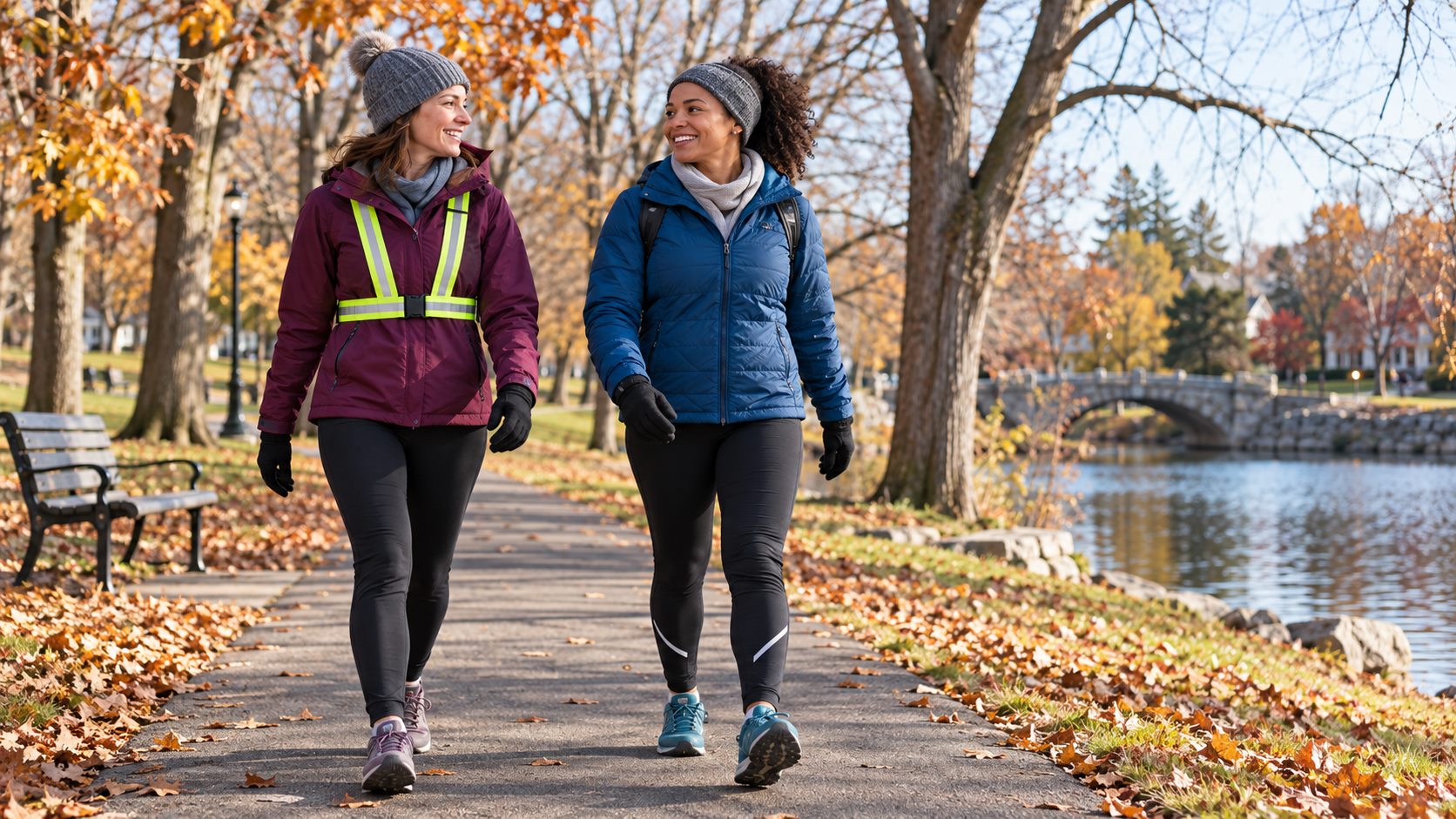
When daylight gets shorter and temperatures drop, a walking habit can become harder to keep. The answer does not have to be a strict training plan. A realistic routine gives you a few options: a short neighborhood loop, an indoor walk, or a rest day when weather and footing make going outside a poor choice.
The National Institute on Aging recommends checking conditions, dressing in layers, and being mindful of cold-weather risks when exercising outdoors. Its cold-weather exercise tips are a helpful safety reference. This article offers general planning ideas, not individualized medical advice.
Pick a starting point that feels manageable
Choose a time you can repeat most weeks and a route with an easy way to shorten it. If you are starting from a low activity level, begin with a comfortable walk and add time gradually as it feels appropriate. For example, you might reserve two short weekday windows and one optional weekend walk, then decide the length based on how you feel and what the weather allows. A calendar reminder can help, but the routine should be flexible enough to survive a busy week.
Make a three-option plan
Write down three versions of the habit: an outdoor walk when conditions are comfortable, a shorter option for a packed day, and an indoor alternative such as a mall, hallway, or walking video. This removes the all-or-nothing choice when the forecast changes. If you have a health condition or questions about starting activity, ask a clinician what is suitable for you.
Dress for movement and changing weather
Several comfortable layers make it easier to adjust as you warm up. A moisture-managing base, a warm middle layer, and an outer layer suited to wind or precipitation can be more adaptable than one bulky item. Cover exposed skin when needed, and choose footwear with traction appropriate to the surface. Avoid overdressing so much that you become uncomfortable as you move.
Check the route before leaving
Look at temperature, wind, precipitation, daylight, and local alerts. Choose a familiar route with clear footing and safe places to turn back. In icy conditions or extreme cold, use an indoor plan instead. Tell someone where you are going if you will be walking alone in a remote area, and carry a charged phone when practical.
Keep the goal about consistency, not pace
Some days will be slower, shorter, or indoors. Track the number of times you showed up rather than turning every walk into a performance test. Comfortable movement and a repeatable habit are better foundations than pushing through discomfort to meet an arbitrary target.
A sample week to adapt
Try choosing two or three possible walk windows rather than assigning a rigid daily schedule. Put the shortest walk on the busiest day, and reserve a longer route for a day with more time and favorable conditions. Decide on an indoor backup before the week starts. If you miss a day, return to the next planned opportunity without trying to “make up” every minute.
A useful cold-weather routine is one you can adjust safely. Keep the plan small, check conditions, and let indoor alternatives count when they are the sensible choice.
Related guide: Read our overview of fitness routines and gear.
General editorial guidance. No hands-on product testing or affiliate links are included.